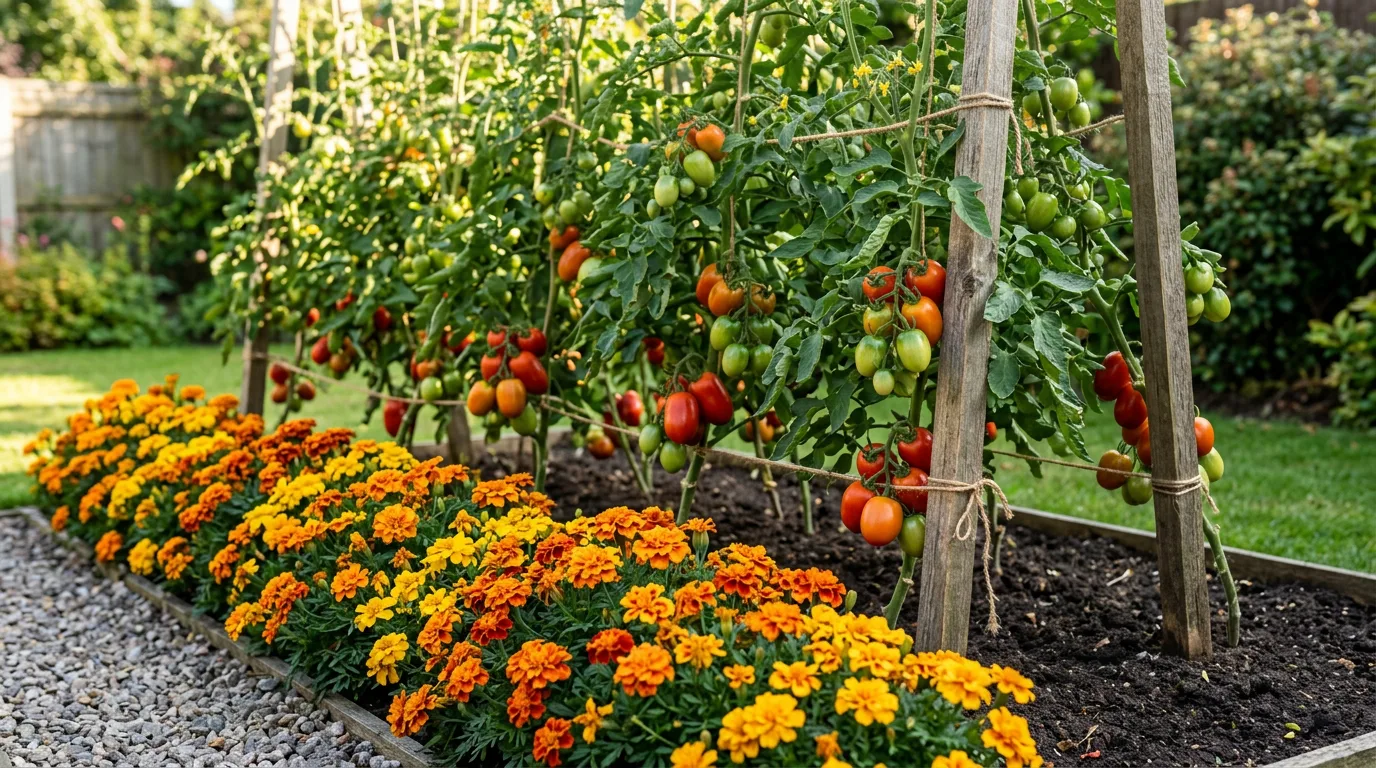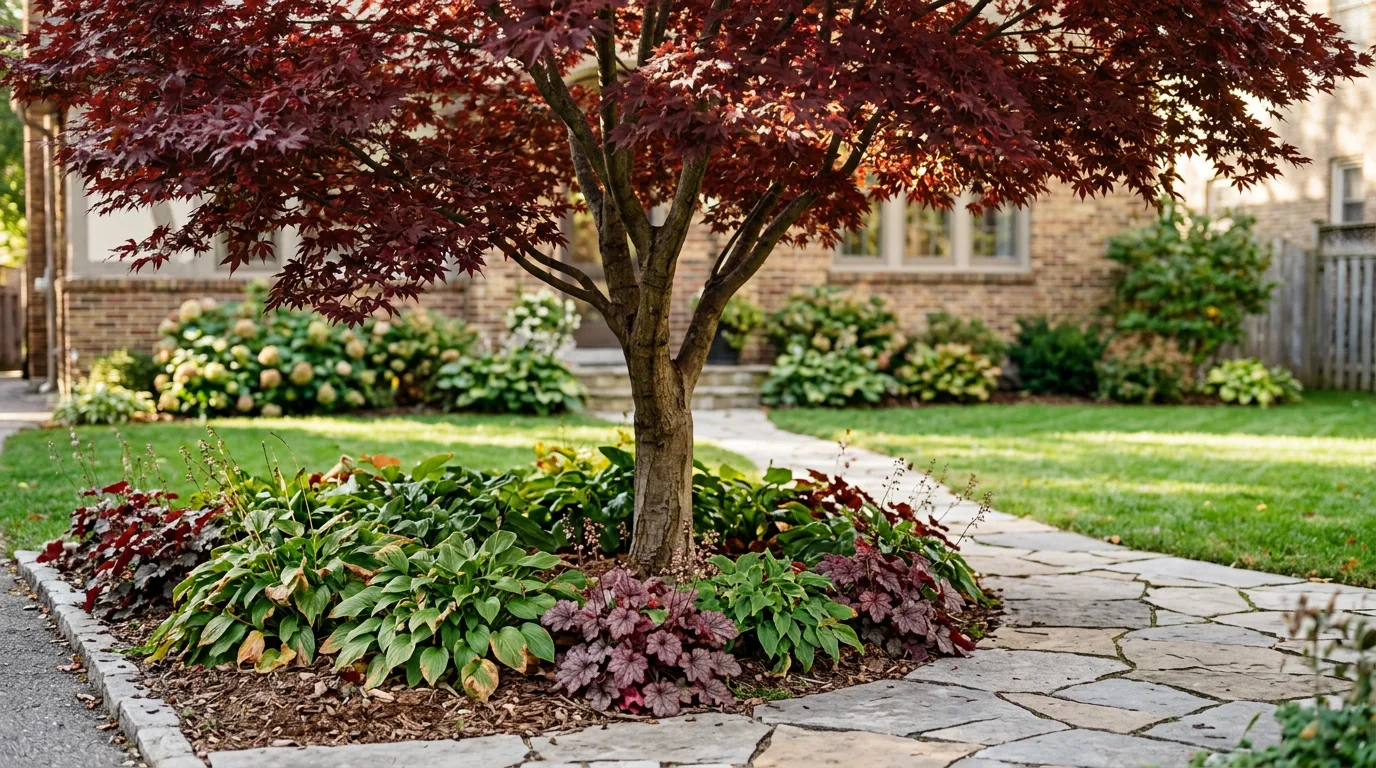
Every rabbit-resistant plant list you will find describes one behaviour — browsing, the nibbling of soft foliage in the growing season. Rabbits have two. The second is gnawing, and in winter it takes the bark off woody stems. No plant list prevents it. The proof is that four plants sit on a state extension service’s rabbit-resistant list and on another state extension service’s list of plants rabbits damage: redbud, pines, roses and euonymus. Neither list is wrong. They are answering different questions, in different seasons, and almost nobody says so.
So this guide does three things no ranking page does. It sets the two lists side by side and explains the contradiction. It shows what a “resistance rating” is actually measuring, using the only recent published ratings with sample sizes attached. And it gives the exclusion specification — mesh, height, burial depth, install and removal dates — from three extension services that do not fully agree with each other either.
The contradiction, in one table
Penn State Extension Master Gardeners of Pike County publish a rabbit-resistant garden and landscape plant list grouped by light and moisture — one of the most complete freely available. Iowa State University Extension publishes how to protect trees and shrubs from animal damage over winter, which names the woody plants rabbits go for. Four entries appear on both.
| Plant | On the Penn State resistant list | On the Iowa State susceptible list |
|---|---|---|
| Redbud (Cercis canadensis) | Yes, under deciduous trees | Yes, named outright |
| Pine (Pinus sp.) | Yes, under evergreen trees | Yes — “small evergreens (especially pines)” |
| Rose (Rosa sp.) | Yes, qualified: “shrub rose [spiny only]” | Yes, “roses” |
| Euonymus (Euonymus sp.) | Yes, under evergreen shrubs | Yes — “burning bush (aka winged euonymus)” |
The resolution is the thing worth taking away: a resistance list is about leaves and a damage list is about bark. A rabbit that will not eat redbud foliage in June will strip redbud bark in February, because by February the foliage is gone and the bark is what is left. The same logic covers the pines — a mature pine is out of reach, a newly planted three-foot one is a meal — and the roses, where a spiny stem is a deterrent to browsing and no deterrent at all to a rabbit chewing through the base of it.
If you take one line from this page: use the plant list for your beds and borders, and ignore it completely for anything young and woody — the trees and shrubs you have put in over the last few seasons. Those get hardware, not horticulture.
Why winter is the dangerous half
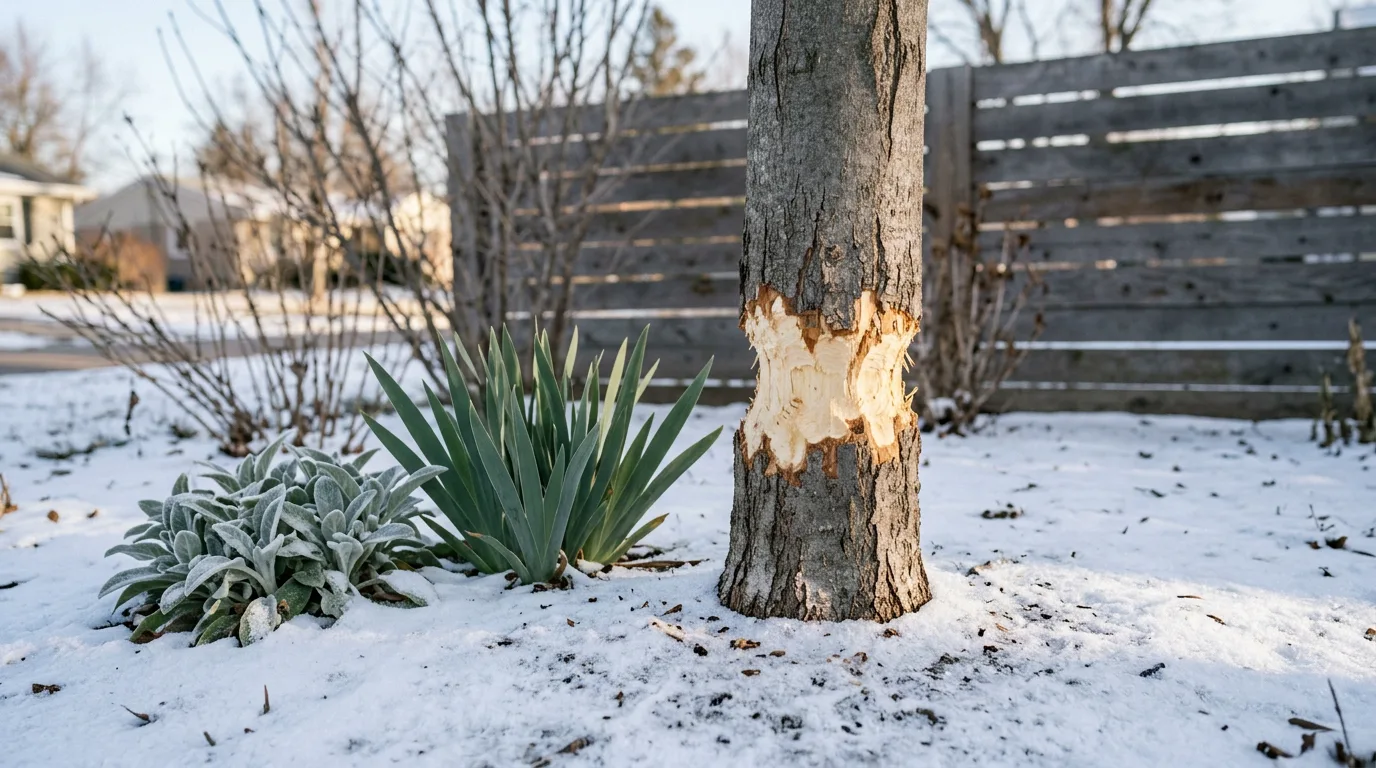
Iowa State sets out the mechanism plainly. “If rabbits remove the tissue down to the wood and go completely around the tree’s trunk, the damaged tree is effectively girdled,” which “destroys the tree by disrupting the downward flow of food from the tree’s foliage to the root system.” Because it is the roots that starve rather than the canopy, a tree girdled in January can leaf out normally in April and then fail later in the season — which is why this damage so often gets blamed on something else.
Colorado State University Extension’s PlantTalk Colorado adds the part that decides how high the damage goes: “The deep snow covers normal food sources and provides a platform for rabbits to reach the bark high on woody plants.” Snow is not just weather here — it is a step stool. A guard sized for bare ground is the wrong height the moment eighteen inches of snow settles against it, and the rabbit simply starts where the guard stops.
Iowa State’s instruction follows from that: fencing “needs to be high enough that rabbits won’t be able to climb or reach over the fence after heavy snow,” and after a heavy fall you should “remove some of the snow to keep rabbits from reaching the trees or shrubs if necessary.” Shovelling snow away from your young trees is not a thing most garden writing mentions, and it is free.
Iowa State’s own list of what to protect first is short and specific: crabapple, apple, pear, redbud, honey locust, serviceberry, burning bush, flowering quince, barberry, roses and raspberries, plus small evergreens. If you planted anything on that list in the last three seasons, it is the thing to guard this autumn — before the ground freezes.
What a “resistance rating” is actually measuring
The most useful recent document on this is the University of Arizona Cooperative Extension’s rabbit plant resistance ratings (publication az2098-3, August 2025, by Halldorson, Barnes, Jones and Braun). It is worth understanding because it is honest about its own method in a way that lists rarely are.
It sorts plants into three bands — never to rarely damaged, sometimes damaged, frequently damaged — and expresses each as a percentage drawn from survey responses, websites and social media, with residents and businesses reporting direct experience. Critically, it publishes an n alongside each plant: “n represents the number of data sources…who provided input; the larger the n value, generally the greater our confidence in the reported probability of damage.”
That tells you how to read every such list, including the two above:
- A rating is a probability, not a property. “Rarely damaged” is a frequency observed by other gardeners, not a chemical fact about the plant.
- Confidence varies wildly within one list. Two plants can sit in the same column looking equally certain when one rests on a dozen reports and the other on a couple. Where an n is published, read it.
- The rating has an expiry date every year. The Arizona authors name the reason: “As the diets of these animals change with wild food availability, yearly precipitation, and temperature variations, it can be difficult to predict which plants will be appealing for consumption.”
- Young and well-fed plants are the exception. The same caveat continues: “plants may be more desirable when they are young and/or well fertilized.” In other words the newly planted, carefully fertilised specimen — the one you most want to protect — is the one most likely to be eaten regardless of its rating.
Colorado State says the same thing in one sentence: “rabbits have taste preferences. Management methods that work in one location may prove ineffective in another.” That is why every regional variant of this search exists, and why a list compiled in Pennsylvania is a starting point rather than an answer in Colorado, Arizona or Ontario.
The plants rabbits usually leave alone
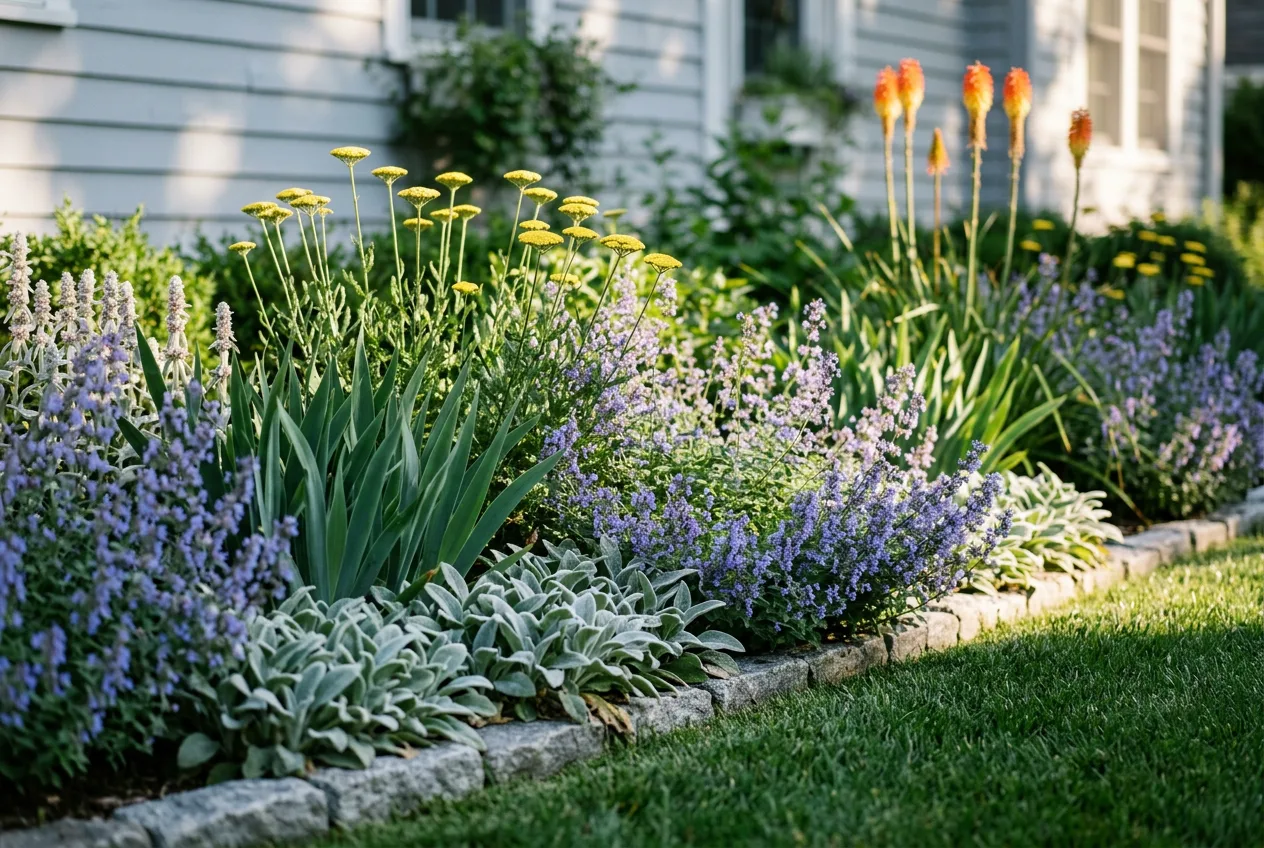
With all of that stated, the lists are still useful for beds and borders. Here are the entries that recur across the Penn State and Colorado State lists, grouped the way you will actually plant them. Botanical names matter — buy by the binomial, because common names drift.
Sun, dry to average
| Plant | Botanical name | Notes |
|---|---|---|
| Lamb’s ear | Stachys byzantina | Woolly leaves; on both lists |
| Yarrow | Achillea millefolium | On both lists |
| Lavender | Lavandula angustifolia | Aromatic foliage |
| Sage, catmint | Salvia sp., Nepeta sp. | Aromatic foliage; both on the Penn State list |
| Red-hot poker | Kniphofia uvaria | On both lists |
| Yucca | Yucca filamentosa | On both lists; rigid, sharp foliage |
| Spike gayfeather | Liatris spicata | |
| Globe thistle | Echinops ritro | Prickly |
| Thyme, oregano | Thymus sp., Origanum sp. | Strongly aromatic |
Sun to part shade
| Plant | Botanical name | Notes |
|---|---|---|
| Daffodil | Narcissus sp. | On both lists; toxic to grazing animals |
| Iris | Iris sp. | On both lists |
| Oriental poppy | Papaver orientale | On both lists |
| Peony | Paeonia sp. | |
| False indigo | Baptisia sp. | |
| Ornamental onion, chives | Allium sp. | Onion scent |
Shade and part shade
| Plant | Botanical name | Notes |
|---|---|---|
| Barrenwort | Epimedium sp. | Leathery foliage |
| Lungwort | Pulmonaria sp. | Bristly leaves |
| Foamflower | Tiarella sp. | |
| Wild ginger | Asarum sp. | |
| Sweet woodruff | Galium odoratum | |
| Bergenia | Bergenia cordifolia | Thick, leathery leaves |
| Foxglove | Digitalis purpurea | On both lists; toxic — see below |
| Monkshood | Aconitum sp. | On both lists; highly toxic — see below |
Look at what most of these have in common and you have the underlying rule: rabbits avoid aromatic foliage (lavender, thyme, catmint, alliums), woolly or bristly foliage (lamb’s ear, lungwort, bergenia), spiny or rigid foliage (yucca, globe thistle, holly) and toxic foliage (daffodil, foxglove, monkshood). When you need a substitute that is not on any list, check it against those four properties rather than hunting for the plant’s name.
For a fuller treatment of how the same reasoning works for the other big browser, see our guide to deer resistant shrubs, which is built on a rated trial rather than a list — and note that deer and rabbit resistance are not the same thing, because the two animals reach different heights and avoid different compounds.
Two things the plant lists never tell you
Resistance is not the same as safe
Some of the most reliably rabbit-resistant plants on these lists are reliable precisely because they are poisonous — and the severity is not uniform, which no list grades. NC State Extension rates monkshood (Aconitum) High, on the alkaloid aconitine, with symptoms running to “paralysis of the respiratory system”; it rates foxglove (Digitalis purpurea) High too, on cardiac glycosides. Lily of the valley (Convallaria majalis) carries the same class of toxin as foxglove but is rated Low — “toxic only if large quantities eaten”.
So the three are not interchangeable, and the property that keeps the rabbits off is the property that makes the first two a poor choice for a garden used by small children or by a dog that chews. The lists never flag any of it, because they are lists about rabbits. If that is your garden, lean on the aromatic and woolly groups instead — lavender, catmint, lamb’s ear, thyme, bergenia — which deter by taste and texture rather than by toxicity.
Resistance is not the same as legal
Rabbit resistance is one axis; whether a plant may be sold or planted where you live is an entirely separate one, and a resistance list has no opinion on it. Three examples from the Penn State list alone:
- Butterfly bush (Buddleja sp.). In Oregon, only ODA-approved seedless cultivars “can be propagated, transported, or sold,” and an approved cultivar must produce “two percent, or less, viable seed” (quarantine rule OAR 603-052-1200). The species is a perfectly ordinary nursery plant three states away.
- Maiden grass (Miscanthus sinensis). NC State Extension records it as an invasive species in North Carolina, listed by the NC Invasive Plant Council, with wind-dispersed seed — while also naming lower-fertility cultivars, including ‘Scout’, a sterile selection from the University of Georgia, and ‘Gracillimus’, ‘Graziella’ and ‘Yaku Jima’ with low seed set. The same entry gives its real mature size: 4–12 ft tall and 4–6 ft wide, zones 5a–9b, which is roughly double what many planting lists quote.
- Lily of the valley (Convallaria majalis). The same NC State entry that rates its toxicity Low records that it “is reported as invasive in Wisconsin and Arkansas and may become weedy and aggressive in regions with moist, cool, winter climates,” and suggests native alternatives. A plant can be on a resistance list, mild in the toxicity column and still the wrong thing to introduce.
The rule that follows is simple and costs nothing: check any plant from a national list against your own state’s noxious weed board or extension service before you buy it, and where a genus is regulated, buy the named sterile cultivar rather than the species. Our guide to ornamental grasses goes further into which grasses behave and which run.
The part that actually works: the specification
For anything woody, the answer is a physical barrier, and the three services that publish specifications differ in the details. Here they are together, which is the comparison nobody prints.
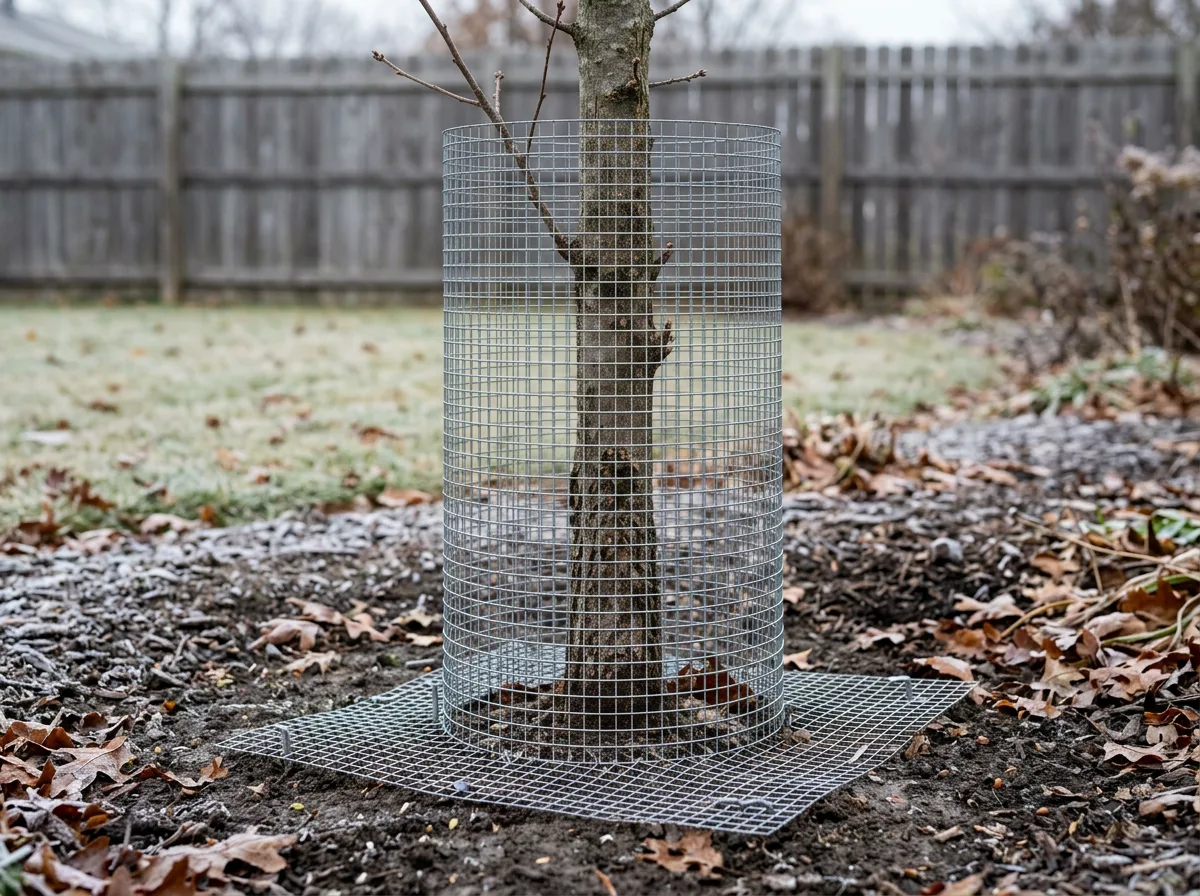
| Garden or bed fence | Trunk and stem guard | |
|---|---|---|
| Material | Chicken wire or hardware cloth (Iowa State); rigid polypropylene tube also acceptable (Colorado State) | Metal hardware cloth (UW–Madison) |
| Mesh | Openings no larger than 1 inch (Nebraska); holes “smaller than a rabbit head because they will squeeze through small spaces” (Colorado State) | ¼ inch or ½ inch (UW–Madison) |
| Height | 24–36 in (Iowa State); 2–3 ft to stop jumping (Nebraska) | Sold in 24, 36 and 48 in rolls; take the taller where snow is deep (UW–Madison) |
| At the ground | Buried at least 6 in against digging (Nebraska, Colorado State) | Splayed flat around the trunk and pinned with sod staples (UW–Madison); U-shaped anchor pins (Iowa State) |
| Timing | In place before winter | Up “before the ground freezes too far down”; off “once mid-April comes and the grass is greening up” (UW–Madison) |
Four practical points fall out of that table.
- Mesh size is doing two different jobs. A one-inch mesh keeps a rabbit out of a bed. It is too coarse for a trunk guard, where the University of Wisconsin–Madison Extension specifies ¼ or ½ inch, because that cylinder is sized to stop rodents as well: voles are far smaller than rabbits and do very similar damage at ground level.
- Height is measured from the snow, not the soil. Buy the 36 or 48 inch roll if you get real winters. A 24 inch guard with a foot of drift against it is a 12 inch guard.
- The bottom edge is the failure point. Nebraska says bury the fence at least six inches; Wisconsin says splay the mesh flat and sod-staple it. Either works. Neither is optional, because a rabbit that cannot climb will dig.
- Take the guards off in spring. A cylinder left on through summer traps moisture against the bark and gives insects somewhere to live. Mid-April is the date UW–Madison gives.
Guards go on at the same time as the rest of your autumn work, so it belongs on the same afternoon as the jobs in our guide to preparing the garden for winter — and if you are shortening woody plants at the same time, check the timing in when to prune shrubs first, because a hard autumn cut on the wrong shrub costs you next year’s flowers whatever the rabbits do.
Planning a bed you will not have to defend
The most durable fix is a planting plan where the vulnerable things are not in the exposed, easy positions to begin with: the aromatic and woolly plants on the outer edge where a rabbit meets the bed first, anything newly planted and woody guarded for its first three winters, and the genuinely tender material kept inside a fenced area rather than scattered through the garden.
That is a layout decision, and layout is much easier to judge as a picture than as a list. With Hadaa you can upload a photograph of the bed you are worried about and see a planting scheme rendered onto your own yard, with the planting checked against your hardiness zone, before you buy anything. It will not tell you what the local rabbits think — nothing will, reliably — but it will show you whether the arrangement works before you have spent the money.
If you are starting from a blank front garden rather than defending an existing bed, what to plant in your front yard covers the same ground from the design end.
Frequently asked questions
What plants do rabbits hate the most? Across the Penn State and Colorado State lists, the entries that recur most are lamb’s ear, yarrow, yucca, red-hot poker, iris, daffodil, oriental poppy, foxglove and monkshood. They share four properties — aromatic, woolly, spiny or toxic foliage — and that pattern is a more reliable guide than any individual name, because rabbit preferences are local.
Are there rabbit-proof plants? No. Colorado State Extension puts it plainly: “rabbits have taste preferences. Management methods that work in one location may prove ineffective in another.” The University of Arizona’s ratings make the same point from the data side — diets shift with wild food availability, rainfall and temperature, and young or well-fertilised plants are eaten more readily than the same species established.
What are good rabbit resistant plants for shade? Barrenwort (Epimedium), lungwort (Pulmonaria), foamflower (Tiarella), wild ginger (Asarum), sweet woodruff (Galium odoratum) and bergenia all appear on the Penn State shade lists, and most of them deter by leaf texture — leathery, bristly or thick — rather than by toxicity, which makes them a better choice than foxglove or monkshood in a garden used by children or dogs.
Do rabbit resistant plants work in winter? Only for the foliage. The winter problem is bark, and no plant choice prevents it on a young woody plant. Iowa State names crabapple, apple, pear, redbud, honey locust, serviceberry, burning bush, flowering quince, barberry, roses, raspberries and small evergreens as the ones to protect, and the protection is a hardware cloth cylinder, not a substitution.
How tall does a rabbit fence need to be? Two to three feet, per University of Nebraska–Lincoln Extension, with mesh openings no larger than one inch and the bottom buried at least six inches to stop digging. Iowa State gives 24–36 inches and anchoring with U-shaped pins. Where snow is deep, measure from the expected snow surface rather than the soil — deep snow acts as a platform that lets rabbits reach bark much higher up the trunk.
Will a rabbit-resistant plant list work in my zone? Partly. The plants themselves are zone-bound in the ordinary way, but the resistance half is regional in a different sense: the list reflects what the rabbits in that state had available to eat instead. Use a national list to generate candidates, then check both the hardiness and the local behaviour with your own state extension service, which is also where you will find out whether anything on the list is regulated where you live.