
Backyard Makeover Cost: What $10K, $30K, $75K & $125K Actually Gets You
Dennis Mutahi
Landscape Design Writer
A backyard remodel costs roughly $5,000 to $125,000+, and most homeowners land between $15,000 and $40,000. What decides where you land is not the size of the yard but how much of the budget goes into structures: a planting-and-lighting refresh sits at the bottom of that range, one hardscape feature plus full landscaping sits in the middle, and a pool or an outdoor kitchen puts you at the top. This guide breaks the range into six tiers with line-item examples, a published regional price index you can look up for your own state, and the hidden expenses most homeowners miss.
Quick Budget Breakdown
$5K Backyard: The refresh budget — cleanup, fresh planting beds, mulch, steel or aluminium edging, and one focal plant. Softscape only, no structures.
$15K Backyard: The foundation budget — a 150–200 sq ft concrete or paver patio, a professional planting plan, basic drip irrigation, and simple lighting.
$10K Backyard: Cosmetic refresh — new plants, mulch, basic patio repairs, simple lighting. DIY-friendly with contractor support for hardscape.
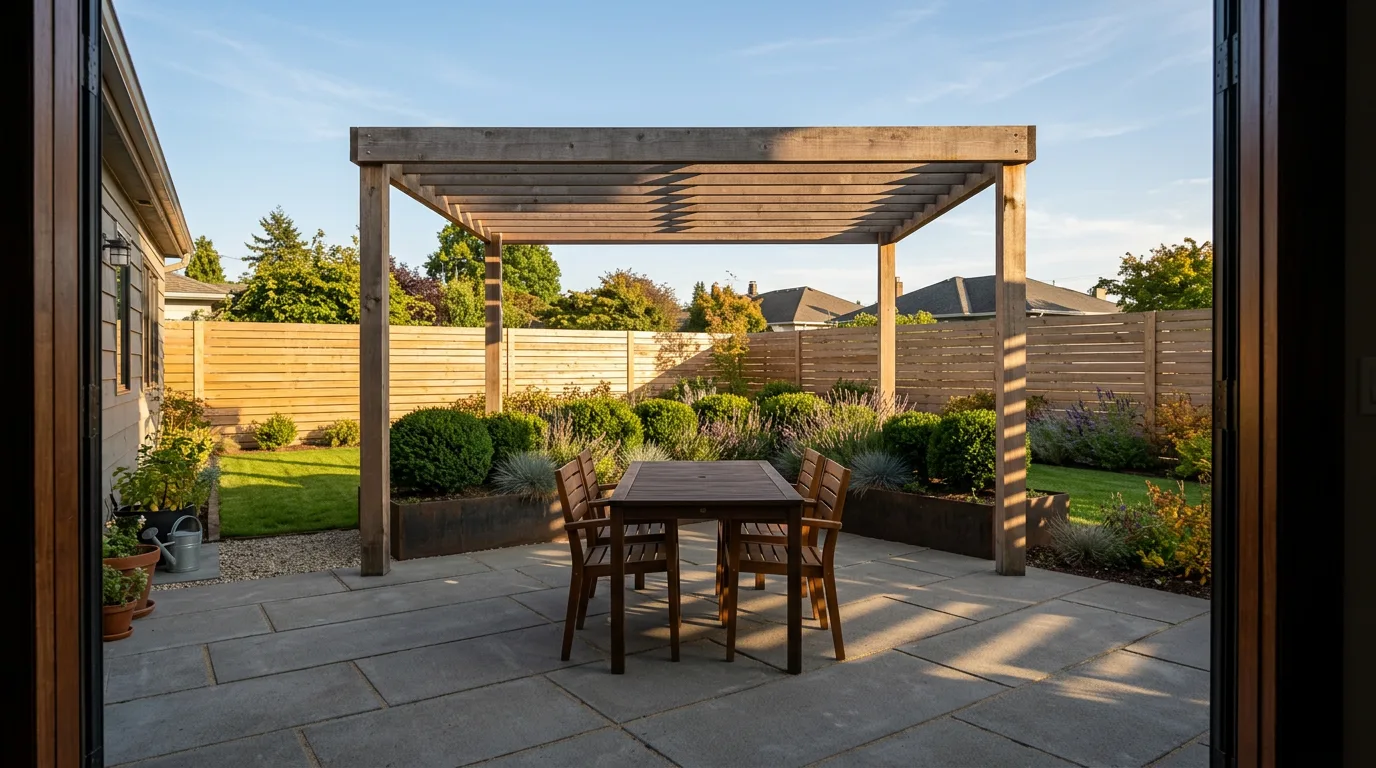
$30K Backyard: One major feature (deck, patio, or pergola) plus full landscaping, irrigation, and quality materials. Most common renovation tier.
$75K Backyard: Multiple hardscape elements (patio + fire pit + outdoor kitchen foundation), professional irrigation, mature plantings, and architectural lighting.
$125K+ Backyard: Luxury features (pool, full outdoor kitchen, pavilion, water features), custom materials, and turnkey installation with warranties.
Backyard Makeover Cost by Tier (At a Glance)
| Tier | Scope | Typical total | Timeline | Best ROI move |
|---|---|---|---|---|
| $10K | Cosmetic refresh: plants, mulch, lighting, minor hardscape repair | $8K–12K | 1–3 weekends DIY / 3–5 days pro | Three specimen trees + dense planting borders |
| $30K | One major feature (patio, deck, or pergola) + full landscaping & irrigation | $28K–38K | 2–4 weeks | Designed lighting and a single quality hardscape feature |
| $75K | Multiple hardscape zones, outdoor-kitchen foundation, mature plantings | $70K–80K | 6–10 weeks | Mature 24" box specimen trees for instant impact |
| $125K+ | Luxury build: pool, full outdoor kitchen, pavilion, custom finishes | $120K–150K+ | 12–20 weeks | Broad-market anchors (kitchen, pool, structure) over niche detail |
Totals are mid-market national estimates including labor. Multiply by 1.4–1.6× for high-cost metros (SF, LA, NYC) or 0.8–1.0× for low-cost markets (Texas, Midwest). The $5K and $15K refresh tiers are covered in the next section.
The internet loves to throw around vague ranges ("$5K to $100K depending on scope!"), but that doesn't help you plan. What does $30,000 actually buy? How much more do you get for $75K versus $50K? And where do contractors typically cut corners when budgets get tight?
Whether you're planning a cosmetic refresh or a full luxury transformation, you'll know exactly what to expect for your money.
The $5K Backyard: The Refresh Budget
Five thousand dollars sounds like a lot until you start getting quotes. At this level you're working almost entirely in softscape — plants, soil amendment, and surface finishes — with no structural elements. What's realistic: a thorough site cleanup, defined planting beds with fresh topsoil and compost, 2–3 cubic yards of premium mulch, steel or aluminium edging throughout, and a planting scheme of 15–25 plants at 1–2 gallon sizes. One focal specimen — a Japanese maple, ornamental cherry, or compact olive tree — anchors the space.
DIY labour extends this budget meaningfully. If you install the plants yourself and hire only for deliveries, your $5K goes further on plant quality than if you pay for installation.
What $5,000 Typically Includes
- Site prep: weed clearing, edging definition, existing bed renovation.
- Planting: 15–25 plants at 1–2 gallon sizes, 1–2 focal specimens.
- Mulch: 2–3 cubic yards applied 3" deep.
- Edging: steel or aluminium border defining beds from lawn.
- Gravel path (optional): a simple decomposed granite or pea gravel path.
What you won't get at $5K: hardscape (patios, decks, walls), irrigation systems, lighting, or any structural elements. Paving starts at $15–$25/sq ft installed, so even a small 100 sq ft patio consumes your entire budget.
The $15K Backyard: The Foundation Budget
Fifteen thousand dollars is where the word "renovation" starts to feel accurate. You can now combine hardscape — a concrete or paver patio — with a proper planting plan, and still have budget left for basic amenities. A 150–200 sq ft poured concrete patio costs $2,250–$5,000 at $15–$25/sq ft installed in most US markets; pavers run $20–$35/sq ft. That leaves $10,000–$12,000 for everything else: planting with 3–5 gallon plants (visually impressive in year one), basic drip irrigation, and simple outdoor lighting on a timer.
What $15,000 Typically Includes
- Patio or deck: 150–200 sq ft concrete, pavers, or pressure-treated wood.
- Planting plan: professionally designed, 20–35 plants at 3–5 gallon.
- Drip irrigation: basic zone-based system for beds.
- Pathway lighting: solar or low-voltage path lights.
- Mulch and edging: beds finished and defined.
For a deeper material-by-material breakdown of the patio at the heart of this tier, see our patio cost guide.
The $10K Backyard: Strategic Cosmetic Refresh
At $10,000, you're not rebuilding the backyard — you're maximizing what's already there. This tier works best when your hardscape is structurally sound but dated, and your landscaping needs a reset.
What's Typically Included ($10,000 total)
- Softscape overhaul ($3,500–4,500): Remove overgrown or dead plants, install 20–30 new foundation plantings, add 3–5 cubic yards of premium mulch, edge all beds.
- Hardscape refresh ($2,000–3,000): Pressure wash and re-sand existing paver patio, repair cracked concrete walkways, add 1–2 tons of decorative gravel for pathways.
- Lighting ($1,500–2,000): Low-voltage LED path lights (8–12 fixtures), 2–3 uplights for trees, transformer and wiring. DIY installation saves $500–800.
- Outdoor living basics ($1,500–2,000): Small fire pit kit, budget furniture set, outdoor rug, or shade structure.
- Lawn renovation ($800–1,200): Aeration, overseeding, starter fertilizer for 2,000–3,000 sq ft.
- Contingency/labor ($1,000–1,500): Unexpected repairs, tool rentals, or contractor labor for tasks beyond DIY skill level.
What you won't get: New decks, patios, retaining walls, irrigation systems, or major grading work. This tier assumes your "bones" are good.
Best ROI Moves at This Tier
- Focus on curb appeal zones: The area visible from the house and any entertaining space. Allocate 60% of plant budget here.
- DIY where labor is 50%+ of cost: Mulching, painting fences, planting, and lighting installation are all DIY-friendly.
- Buy plants small: One-gallon perennials instead of three-gallon saves 40–60% and they'll catch up in 18 months.
- Salvage and reuse: Existing pavers can be lifted, cleaned, and re-laid in a new pattern for a fresh look at near-zero material cost.
Timeline: 1–3 weekends for DIY execution, or 3–5 days with a contractor.
The $30K Backyard: One Major Feature + Full Landscaping
At $30,000, you can add one significant hardscape element and complete the landscaping around it. This is the most common renovation tier for homeowners who want a functional upgrade without a full rebuild.
What's Typically Included ($30,000 total)
- Primary hardscape feature ($12,000–16,000): 300–400 sq ft paver patio with seating wall, 12×20 ft composite deck, or wood pergola with 10×12 ft footprint.
- Full softscape install ($6,000–8,000): 40–60 plants (mix of shrubs, perennials, ornamental grasses, small trees), soil amendments, 8–12 cubic yards mulch.
- Irrigation system ($3,500–5,000): Drip irrigation for beds, 4–6 spray zones for lawn (up to 5,000 sq ft coverage), smart controller, backflow preventer.
- Lighting ($2,000–3,000): 15–20 LED fixtures (path, accent, hardscape), transformer, wiring, installation.
- Secondary features ($2,500–4,000): Gravel pathways, raised garden beds, small water feature, or basic outdoor kitchen prep.
- Contingency ($2,000–3,000): Soil amendments, drainage corrections, permit fees, or unforeseen repairs.
Material Choices at This Budget
- Pavers: Mid-grade concrete pavers or porcelain tiles. Expect $12–18/sq ft installed. Natural stone starts at $20–25/sq ft.
- Decking: Composite (Trex, TimberTech) is standard. Pressure-treated wood saves $3–5/sq ft but requires maintenance.
- Pergolas: Cedar or redwood with basic hardware. Powder-coated aluminum adds $2,000–4,000 but eliminates maintenance.
Timeline: 2–4 weeks from design to completion. Permitting adds 1–3 weeks in regulated areas.
The $75K Backyard: Multiple Hardscape Elements + Premium Finishes
At $75,000, you're building a complete outdoor living system with multiple functional zones. This tier delivers a turnkey backyard that feels like a resort extension of your home.
What's Typically Included ($75,000 total)
- Primary hardscape ($25,000–30,000): 600–800 sq ft paver or natural stone patio with built-in seating, outdoor kitchen foundation, gas fire pit with stone surround.
- Secondary hardscape ($10,000–15,000): Composite deck (300–400 sq ft), pergola or shade structure, retaining walls (up to 4 ft height), raised planter beds.
- Professional softscape ($12,000–15,000): 80–120 plants including 3–5 specimen trees (2–3" caliper), layered foundation plantings, 15–20 cubic yards premium mulch.
- Irrigation + drainage ($6,000–8,000): Comprehensive drip and spray system with WiFi controller, French drains or dry creek beds for problem areas.
- Architectural lighting ($5,000–7,000): 30–40 fixtures including path, uplighting, hardscape wash, bistro string lights, zoned control.
- Water feature ($4,000–6,000): Pondless waterfall, bubbling boulder, or small koi pond (6×8 ft) with pump, filtration, and landscaping integration.
- Contingency ($5,000–7,000): Grading, underground utility relocation, soil replacement, or upgrade allowances.
Where Premium Materials Make Sense
- High-traffic hardscape: Porcelain pavers or natural stone (bluestone, limestone) last 30+ years with minimal maintenance versus 15–20 for concrete pavers.
- Outdoor kitchen: Stainless steel framing and cement board substrate prevent rust and rot in covered structures.
- Mature trees: 3–4" caliper specimens establish faster and deliver instant canopy versus waiting 5–7 years for small stock.
- Smart irrigation: WiFi controllers (Rachio, Rain Bird) with weather sensors reduce water bills 20–40%.
Timeline: 6–10 weeks including design, permitting, and installation. Complex grading or utility work can add 2–4 weeks.
The $125K+ Backyard: Luxury Features + Architectural Integration
At $125,000 and up, you're building a custom outdoor living estate. This tier includes pools, pavilions, full outdoor kitchens, and architectural elements that require engineering and long-term warranties.
What's Typically Included ($125,000 total — pools add $50K–100K+)
- Pool or water feature ($50,000–80,000): 12×24 ft gunite pool with tile finish, equipment, heating, and basic coping. Infinity edge, spa, or water features add $20K–40K.
- Complete outdoor kitchen ($20,000–30,000): Built-in grill, side burners, refrigerator, sink with hot water, 12–16 linear ft countertop, stone veneer base.
- Pavilion or covered structure ($18,000–25,000): 12×16 ft pavilion with engineered beams, metal roof, ceiling fan, recessed lighting, and electrical service.
- Premium hardscape ($15,000–20,000): 800–1,000 sq ft natural stone patio, custom fire feature, seat walls, pillars, or water bowls.
- Landscape architecture ($8,000–12,000): Specimen trees (4"+ caliper), mass plantings (150+ plants), lighting integration, boulders, decorative gravel.
- Smart systems ($5,000–8,000): Integrated lighting, irrigation, audio, and pool controls via single app.
- Contingency ($9,000–15,000): Engineering fees, soil reports, grading, utility upgrades, extended warranties.
The Hidden Costs at This Tier
- Engineering stamps: Retaining walls over 4 ft, pavilions, and some pool decks require structural engineering ($1,500–3,500).
- Utility upgrades: Gas lines, electrical panels (sub-panel for outdoor kitchen), and water lines often need capacity upgrades ($2,000–5,000).
- Soil remediation: Poor drainage or expansive soils may require French drains, soil replacement, or geotextile fabric ($3,000–8,000).
- HOA/permit complications: Architectural review, variance applications, or impact fees add $1,000–4,000 and 4–8 weeks.
- Winter or seasonal delays: Concrete, grading, and pool work can't happen in freezing weather; plan for 2–4 month delays in cold climates.
Timeline: 12–20 weeks for full installation. Pool builds alone are 8–12 weeks; add 4–8 weeks for coordinating pavilion, kitchen, and landscaping.
How Budget Allocation Shifts Between Tiers
The same dollar buys very different things at $10K versus $125K. At the low end, labour and site prep dominate. As budgets climb, structures and amenities take over while planting becomes a smaller share of the total.
| Feature | $10K | $30K | $75K | $125K |
|---|---|---|---|---|
| Planting budget | 40% | 17% | 11% | 8% |
| Hardscape (pavers/concrete) | 10% | 7% | 11% | 12% |
| Structures (pergola/kitchen) | 0% | 8% | 15% | 24% |
| Utilities (gas, electrical) | 0% | 0% | 3% | 6% |
| Specimen trees (24" box) | 0% | 0% | 5% | 8% |
| Outdoor kitchen | 0% | 0% | 9% | 12% |
| Pool or hot tub | 0% | 0% | 0% | 16% |
| Site prep, irrigation, labor | 50% | 68% | 46% | 14% |
Related cost guides
Regional Cost Variations: The 20–60% Multiplier
The budgets above reflect national averages, but your actual cost depends heavily on where you live. Before the contractor rules of thumb, here is a number you can look up rather than take on trust.
Start with your state's published price level
The US Bureau of Economic Analysis publishes Regional Price Parities — an official index of how price levels in each state compare with the national average, where the national level is 100. For 2024 the highest were California at 110.7, Hawaii at 110.0 and New Jersey at 108.8; the lowest were Arkansas at 86.9, Mississippi at 87.0, and Iowa and Oklahoma at 87.8.
Read it carefully, because it is not a landscaping multiplier. RPP measures all consumer prices, most of which have nothing to do with building a patio, and the all-items spread between the most and least expensive state is only about 27%. A backyard build spreads much wider than that, because it is mostly labour and land-linked overhead — the same BEA release puts the housing-rent parity at 154.3 in California against 54.2 in West Virginia, a spread of nearly three to one.
So use RPP as the floor of the adjustment, not the answer: if your state sits at 110, assume at least 10% above the national tiers above, then apply the market multiplier below. If it sits at 87, the national tiers are already generous for you.
Contractors price by metro rather than by state. Here is how the same $30K project scales across the three market bands, using rates reported by landscape contractors rather than a published index:
High-Cost Markets (1.4–1.6× multiplier)
San Francisco Bay Area, Los Angeles, Seattle, Boston, New York metro:
- Labor: $75–120/hour for skilled trades (versus $45–65 national average)
- Permitting: $800–2,500 for standard projects (versus $200–600)
- Material delivery: Limited access, parking restrictions add 15–25% to material costs
Example: A $30K patio project in Phoenix becomes $42K–48K in San Francisco
Moderate-Cost Markets (1.1–1.3× multiplier)
Denver, Portland, Austin, Raleigh, Miami, Phoenix, San Diego:
- Labor: $55–75/hour
- Permitting: $300–800
- Competitive contractor markets keep costs reasonable
Example: A $30K project runs $33K–39K
Low-Cost Markets (0.8–1.0× baseline)
Texas (outside Austin), Florida (outside Miami), North Carolina, Tennessee, Midwest metros:
- Labor: $40–60/hour
- Permitting: $150–400 or not required for many projects
- Year-round construction keeps contractor schedules full and prices competitive
Example: A $30K project can be completed for $24K–30K
DIY vs Contractor: Where to Save Without Regret
Most homeowners assume they'll save 50% by DIYing everything. In reality, labor is 40–60% of total cost, but only some tasks are practical to DIY. Here's where to draw the line:
High-ROI DIY Tasks (save 50–70% of cost)
- Planting and mulching: Labor is 60–70% of cost. Savings: $2,000–4,000 on a $30K project.
- Lighting installation (low-voltage only): Fixtures and wire cost $800–1,500; contractor charges $2,000–3,000. Savings: $1,200–1,500.
- Staining/sealing decks and fences: Materials cost $200–400 for 500 sq ft; contractor charges $1,200–2,000. Savings: $1,000–1,600.
- Demolition and hauling: Contractors charge $1,500–3,000. DIY cost: truck rental ($100–200) plus dump fees ($150–300). Savings: $1,200–2,500.
- Raised bed and planter builds: Materials for 4×8 ft cedar bed: $150–250. Contractor install: $500–800. Savings: $350–550 per bed.
Risky DIY Tasks (low savings, high risk of do-over)
- Paver patios: Base prep and grading are 60% of success. Improper base leads to settling and re-leveling ($2,000–5,000 repair). DIY only if you've done it before.
- Irrigation systems: Requires pressure calculations, valve sizing, and backflow compliance. Mistakes cause dead zones or flooding. Hire out unless experienced.
- Retaining walls over 2 ft: Require engineered base, drainage, and tieback anchors. Failure causes collapse and property damage. Not DIY-appropriate.
- Electrical (line voltage): Permit required, inspection required, liability for fire or shock. Hire a licensed electrician.
- Gas lines: Requires permits, pressure testing, and inspection. Leak risk is catastrophic. Always hire licensed plumber or gas fitter.
The Hybrid Approach (Best Value)
Real example: $30K full project becomes $22K–24K with hybrid approach (DIY planting, lighting install, and demolition; hire hardscape, irrigation, and design).
- Hire design and hardscape pros for patio, deck, pergola, or any structural element. Get engineered drawings and permits.
- DIY all softscape (planting, mulch, edging) using the contractor's design plan.
- Hire irrigation install, DIY seasonal adjustments.
- DIY lighting installation using a pro's lighting plan.
- Hire demolition if access is difficult; DIY if it's open and easy.
How AI Design Reduces Revision Costs (The 15–25% Hidden Expense)
Here's the cost nobody warns you about: design revisions and change orders during construction. They're the #1 budget killer for backyard projects, and they happen because most homeowners can't visualize 2D plans.
The Change Order Tax
Typical scenario: Contractor shows you a CAD plan and a mood board. You approve. Construction starts. Three days in, you realize:
- The patio is too small for your furniture
- The fire pit placement blocks the view from the deck
- The pergola shade doesn't cover the dining area at 6 PM
- The plant palette looks nothing like what you imagined
Change orders cost 2–3× more than getting it right upfront:
- Demolition and re-work: $1,500–4,000
- Material restocking fees: 15–25% of original material cost
- Re-permitting if scope changes: $300–1,000
- Schedule delays: 2–6 weeks lost
Real cost: A $35K project with two mid-construction changes becomes $42K–48K.
How Photorealistic Visualization Prevents This
Hadaa's AI-powered design tool generates photorealistic renderings of your backyard before construction starts, so you see exactly what you're approving:
- True-to-scale hardscape: See if your table and chairs actually fit, with accurate spacing
- Lighting and shadow simulation: Visualize shade coverage at different times of day
- Plant maturity preview: See what your landscape looks like at 1 year, 3 years, and 5 years
- Material and color accuracy: Compare paver styles, stone colors, and plant textures in your actual lighting conditions
Homeowners using AI design tools report 15–25% fewer change orders and finish projects 2–4 weeks faster than traditional hand-drawn plan workflows.
How to Build Your Budget (Backwards)
Most homeowners start by asking "what can I afford?" The better question is "what outcome do I need, and what's the minimum viable version?"
The Outcome-First Budget Process
- Define your primary use case: Entertaining 10+ people? Solo coffee spot? Kids' play zone? Your answer determines where 60% of budget goes.
- Identify your non-negotiables: The 2–3 features you won't compromise on (e.g., "covered dining for 8" or "low-maintenance plantings").
- Price those non-negotiables: Get 3 contractor quotes for just those elements. That's your baseline budget.
- Allocate 20% to "nice-to-haves": Lighting, water features, upgraded materials, or secondary features.
- Reserve 15% contingency: For unforeseen issues (drainage, soil, utility conflicts) or mid-project upgrades.
Real Example: $40K Target Budget
- Non-negotiable ($28K): 400 sq ft covered patio with ceiling fan, built-in grill island, and low-voltage lighting
- Nice-to-haves ($8K): Fire pit, upgraded pavers (porcelain vs concrete), or second seating area
- Contingency ($6K): Holds for drainage corrections or upgraded electrical panel
- Phased approach if needed: Build patio and grill year 1 ($28K), add fire pit and landscaping year 2 ($8K–12K)
This approach ensures you get your must-haves fully completed rather than a half-finished project where everything is compromised.
Frequently Asked Questions
What's the average cost to redo a backyard?
What can I do with a $5,000 backyard budget?
Is $15,000 enough for a backyard renovation?
How much should I budget for a 500 sq ft patio?
Is it cheaper to DIY or hire a landscaper?
What adds the most value to a backyard?
How much does a full outdoor kitchen cost?
Should I install a pool or invest in other features first?
What's the cost difference between regions?
How does AI design reduce my final cost?
Your Budget, Your Timeline, Zero Surprises
Design Your Backyard in Minutes
Get photorealistic AI renderings of your backyard at any budget. See exactly what you're building before spending a dollar on contractors — no surprises, no change orders, no regrets.


