
Francis Karuri
Landscape & AI Correspondent
Rooftop Garden Design Ideas: How to Turn a Flat Roof or Terrace Into a Green Space
Rooftop gardens transform unused flat roofs and terraces into productive green spaces that reduce urban heat, manage stormwater, improve air quality, and provide private outdoor retreats in dense cities. This guide covers structural requirements, waterproofing systems, container selection, wind-resistant planting, and AI design tools that generate photorealistic renders from your actual rooftop photos.
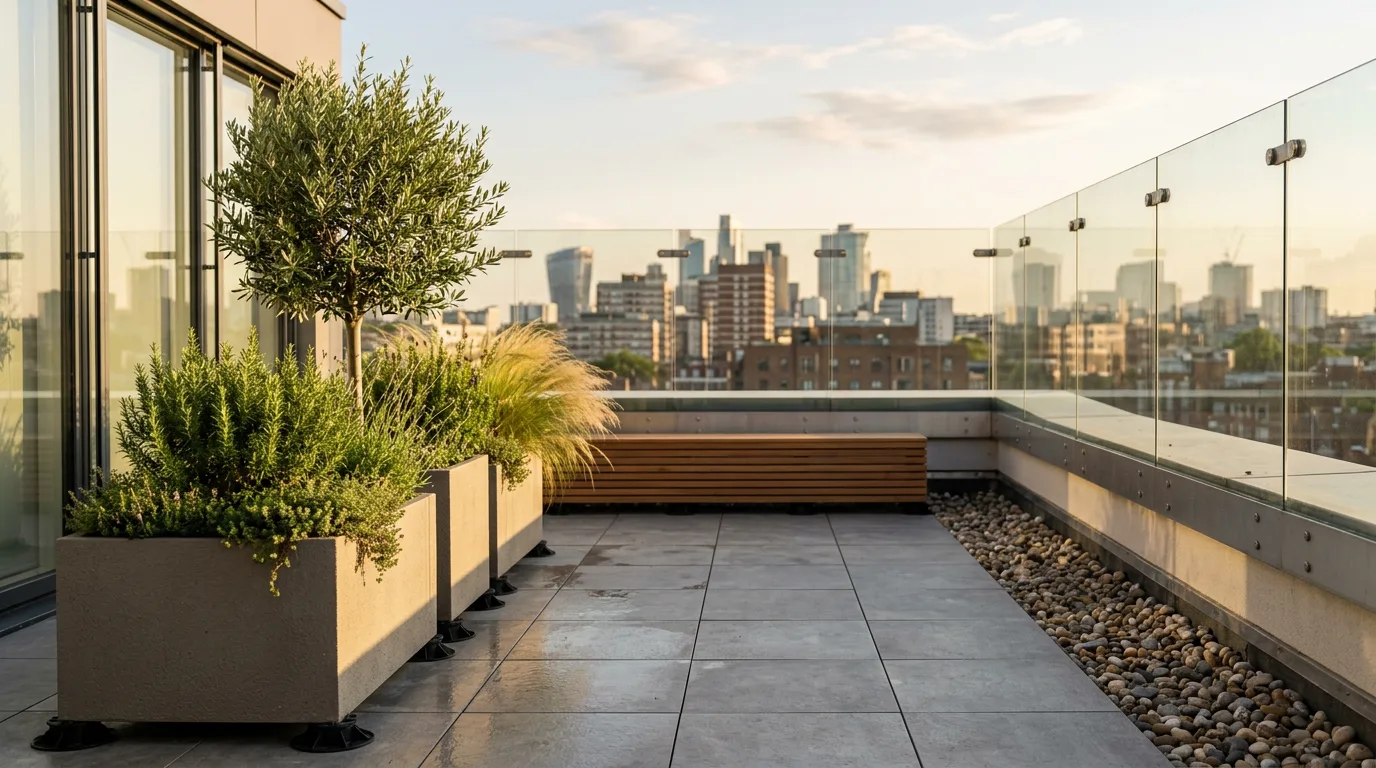
Structural Requirements: Can Your Roof Support a Garden?
The first and most critical question when planning a rooftop garden is whether the existing roof structure can safely carry the additional load. Most residential flat roofs in the UK are designed to support basic waterproofing, insulation, and maintenance access — not the sustained weight of soil, plants, water, containers, furniture, and people.
Always consult a structural engineer before starting. This is not optional, particularly for older buildings, large planting schemes, or intensive gardens with trees and deep soil beds. A structural survey typically costs £300–£800 and will either confirm the roof's capacity or specify required reinforcement.
Load Capacity by Garden Type
| Garden Type | Soil Depth | Load (kg/m²) | Typical Plant Types |
|---|---|---|---|
| Extensive (Lightweight) | 5–15 cm | 50–150 kg/m² | Sedums, mosses, alpine plants, shallow herbs |
| Semi-Intensive | 15–30 cm | 150–300 kg/m² | Ornamental grasses, perennials, small shrubs, vegetables |
| Intensive (Full Garden) | 30–60+ cm | 300–500+ kg/m² | Trees, large shrubs, lawns, deep-rooted plants |
Most residential roofs without reinforcement can support extensive systems only. If you want trees, raised beds, or a lawn-like garden, the roof will almost certainly need structural upgrades — steel beams, column reinforcement, or load distribution systems installed by structural engineers and roofing contractors.
For lightweight container gardens, distribute weight across load-bearing walls and avoid concentrating heavy planters in the center of the roof span. Position the heaviest containers (trees, large shrubs, water features) directly over structural supports where possible.
Waterproofing & Drainage Systems
A rooftop garden will fail catastrophically if waterproofing is inadequate. Water damage, structural rot, and interior leaks caused by poor drainage or root penetration can cost tens of thousands to repair — far exceeding the cost of proper installation.
Never plant directly onto an existing roof membrane. Plant roots, especially from aggressive species like bamboo and willow, will puncture standard roofing felt within months. Proper rooftop garden waterproofing requires a multi-layer system installed by roofing specialists.
Standard Rooftop Waterproofing Layers (Bottom to Top)
- Existing roof structure — timber joists, concrete deck, or steel frame
- Primary waterproofing membrane — EPDM rubber, TPO, or reinforced bitumen — must be in good condition
- Root barrier membrane — HDPE or reinforced polyethylene prevents root penetration
- Protection board — rigid foam or geotextile protects waterproofing from mechanical damage
- Drainage layer — lightweight aggregate, drainage mats, or modular trays channel water to outlets
- Filter fabric — geotextile prevents soil from clogging drainage layer
- Growing medium — lightweight engineered soil or container substrate
Drainage is equally critical. Standing water kills most plants, adds weight, and accelerates membrane degradation. Ensure all existing roof drains, gutters, and scuppers are clear, accessible, and functioning before installing planting systems. Most green roof failures trace back to blocked drains discovered years too late.
For container-based rooftop gardens, elevate pots on feet or gravel beds to prevent water pooling beneath containers. Install overflow drains or drainage channels around the perimeter to catch runoff during heavy rain.
Professional Recommendation
Hire a flat roofing specialist to inspect and upgrade waterproofing before adding any garden infrastructure. This typically costs £1,500–£5,000 depending on roof size and existing condition, but it is non-negotiable insurance against structural failure. Request a 10-year waterproofing guarantee in writing.
Container Selection: Lightweight, Durable, and Wind-Resistant
Container choice directly impacts load, drainage, plant health, and longevity. Terracotta and ceramic pots are beautiful but heavy and prone to cracking in freeze-thaw cycles. Rooftop gardens demand materials that balance weight, durability, insulation, and wind resistance.
Container Materials Compared
| Material | Weight | Durability | Cost | Best For |
|---|---|---|---|---|
| Fiberglass | Very light | Excellent | £30–£150 | Large planters, wind-exposed sites |
| Resin composite | Light | Excellent | £20–£100 | All-purpose, modern aesthetic |
| Galvanized metal | Light-medium | Excellent | £25–£80 | Industrial style, troughs, raised beds |
| Recycled plastic | Very light | Good | £15–£60 | Budget option, casual gardens |
| Fabric grow bags | Ultra-light | Fair (2–3 yrs) | £5–£25 | Vegetables, annual flowers, temporary setups |
| Terracotta/ceramic | Heavy | Fair (cracks) | £20–£200 | Avoid on rooftops unless reinforced |
| Concrete | Very heavy | Excellent | £50–£300 | Only for structurally reinforced roofs |
Key Features to Look For
- Drainage holes — at least 3–5 per container, 10–15 mm diameter
- UV-resistant finish — prevents fading and brittleness from sun exposure
- Insulation properties — double-walled or foam-lined containers protect roots from temperature extremes
- Wide, stable base — low center of gravity resists wind toppling
- Built-in water reservoir — self-watering containers reduce irrigation frequency
- Raised feet or stands — lifts containers off membrane, improves drainage, prevents staining
For wind-exposed rooftops, anchor large containers. Even heavy planters can topple in gusts exceeding 40 mph. Use straps, brackets, or sandbags to secure containers to parapets, railings, or structural supports. Never assume weight alone is sufficient — a 50-liter pot filled with soil weighs approximately 50 kg when dry, but wind force can generate enough lift to shift it.
Group containers in clusters rather than scattering them evenly. Clustered arrangements create windbreaks, improve microclimates, and reduce watering frequency by increasing local humidity.
Growing Medium: Lightweight Soil Alternatives
Standard garden topsoil is far too heavy for rooftop use. A cubic meter of wet topsoil weighs 1,600–2,000 kg — well beyond the capacity of most residential roofs. Rooftop gardens require engineered lightweight growing media that balance drainage, water retention, nutrient availability, and structural load.
Lightweight Growing Media Components
- Perlite — expanded volcanic glass; lightweight, excellent drainage, no nutrients
- Vermiculite — expanded mica; retains moisture, improves aeration
- Coconut coir — sustainable peat alternative; good water retention, slow decomposition
- Composted bark — provides structure, slow-release nutrients, improves drainage
- Pumice — volcanic rock; permanent, inert, excellent drainage for succulents
- Expanded clay aggregate (LECA) — lightweight, reusable, ideal for hydroponic and semi-hydroponic systems
- Worm castings or compost — nutrient source; use 10–20% by volume to avoid compaction
Standard rooftop mix formula: 40% composted bark, 30% perlite or pumice, 20% coconut coir, 10% worm castings. This blend weighs approximately 400–600 kg per cubic meter when wet — one-third the weight of topsoil — while providing adequate drainage, aeration, and nutrient availability for most ornamental plants and vegetables.
For extensive green roofs with sedums and shallow-rooted alpines, use a mineral-heavy substrate: 60% crushed brick or lightweight aggregate, 30% pumice, 10% compost. This drains extremely fast, weighs 300–500 kg per cubic meter, and suits drought-tolerant species that thrive in poor, free-draining conditions.
Avoid using pure compost or topsoil. Both compact over time, lose structure when saturated, and become anaerobic in shallow rooftop containers — leading to root rot, foul odors, and plant death.
Pro Tip
Buy pre-mixed lightweight growing media from specialist suppliers (Melcourt, Enviromat, William Sinclair) rather than DIY blending. Commercial mixes are tested for drainage rate, pH stability, and nutrient content, reducing the risk of compaction or waterlogging. Expect to pay £80–£150 per cubic meter delivered.
Plant Selection: Wind-Resistant, Drought-Tolerant, Shallow-Rooted
Rooftop conditions are extreme. Wind speeds are 20–40% higher than at ground level. Summer temperatures on dark membranes can exceed 60°C. Winter exposure causes rapid freeze-thaw cycles. Containers dry out faster than in-ground beds. These factors eliminate most traditional garden plants and favor a narrow subset adapted to alpine, coastal, and xeric (dry) environments.
Choose plants that tolerate: full sun or bright shade, strong wind without breakage, shallow soil (10–30 cm), irregular watering, and temperature swings. Avoid plants with brittle stems, large leaves that shred in wind, deep taproots, or high water demands.
Best Plants for Rooftop Gardens by Type
Ornamental Plants
Sedums (Stonecrops) (Sedum acre, S. album, S. spurium)
Succulent groundcovers; survive in 5–10 cm soil, full sun, minimal water. Ideal for extensive green roofs.
Sempervivums (Houseleeks) (Sempervivum tectorum, S. arachnoideum)
Rosette-forming succulents; drought-proof, frost-hardy, propagate easily. Perfect for shallow trays and crevices.
Lavender (Lavandula angustifolia)
Aromatic shrub; tolerates wind, drought, poor soil. Requires excellent drainage. Prune after flowering to maintain shape.
Thyme (Thymus vulgaris, T. serpyllum (creeping))
Low-growing herb; fragrant foliage, edible, attracts pollinators. Thrives in 10–15 cm soil, full sun.
Festuca glauca (Blue Fescue) (Ornamental grass)
Compact tufts of blue-grey foliage; 20–30 cm tall, drought-tolerant, evergreen. Ideal for gravel mulch schemes.
Alliums (Ornamental Onions) (Allium 'Purple Sensation', A. schoenoprasum (chives))
Spherical flower heads on stiff stems; wind-resistant, edible (chives), bulbs store well. Plant 10–15 cm deep.
Echinacea (Coneflower) (Echinacea purpurea)
Tough prairie perennial; large daisy flowers, drought-tolerant once established, attracts butterflies. 30–40 cm soil depth preferred.
Heuchera (Coral Bells) (Heuchera 'Caramel', H. 'Palace Purple')
Evergreen foliage plant; colorful leaves, shade-tolerant, low water needs. Good for shaded rooftop corners.
Edible Plants for Rooftop Gardens
Salad Greens (Lettuce, rocket, mizuna, mustard greens)
Fast-growing annuals; harvest in 4–6 weeks. Grow in 15–20 cm soil, partial shade in summer. Succession sow every 2 weeks spring through autumn.
Herbs (Rosemary, oregano, sage, marjoram)
Mediterranean perennials; love heat, wind, and poor soil. Excellent for container culture. Harvest regularly to encourage bushy growth.
Chili Peppers (Capsicum annuum (cayenne, jalapeño, Thai))
Compact fruiting plants; thrive in containers, full sun, warm conditions. 20–30 cm soil depth. Stake taller varieties against wind.
Cherry Tomatoes (Bush varieties: 'Tumbling Tom', 'Maskotka')
Trailing or compact growth habit; produce heavy yields in 30 cm containers. Require regular feeding and consistent watering. Stake or use tomato cages.
Strawberries (Alpine or June-bearing varieties)
Shallow-rooted perennials; grow in 15–20 cm hanging baskets or troughs. Replace plants every 3 years for best yields.
Bush Beans (Dwarf French beans, 'Safari', 'Purple Teepee')
Compact annual legumes; fix nitrogen, enrich soil. Grow in 20–25 cm soil, full sun. Harvest pods young for continuous production.
Spring Onions & Shallots (Allium cepa var. aggregatum)
Shallow bulbs; harvest leaves as scallions or let mature for bulbs. 10–15 cm soil sufficient. Tolerates crowding.
Radishes (Quick-maturing varieties: 'French Breakfast', 'Cherry Belle')
Fast crop (3–4 weeks); improves soil structure. Grow in 10–15 cm soil. Succession sow for continuous harvest.
Avoid these common mistakes: Planting bamboo (roots penetrate membranes), large trees without structural reinforcement, water-hungry plants like hostas and ferns, annuals requiring daily watering (petunias, impatiens), and plants with brittle stems (delphiniums, hollyhocks) that snap in wind.
For year-round interest, combine evergreen structural plants (lavender, grasses, sedums) with seasonal color (spring bulbs, summer perennials, autumn asters). This layered approach ensures the rooftop never looks bare while minimizing maintenance.
Related Reading
Choosing the right plants for your USDA hardiness zone ensures long-term survival. Hadaa's Biological Engine cross-references every plant against your local climate, frost dates, and rainfall patterns before suggesting species — preventing costly mistakes like planting Zone 9 lavender in a Zone 6 rooftop.
Wind Protection: Screens, Trellises, and Strategic Planting
Wind is the defining constraint of rooftop gardening. Exposed sites regularly experience gusts 2–3× stronger than ground level. Wind desiccates foliage, topples containers, breaks stems, and increases evapotranspiration rates by 50–200%. Effective wind protection is non-negotiable for productive rooftop gardens.
Wind Protection Strategies
- Permeable screens — 50% permeability (lattice, slatted panels, mesh) reduces wind speed without creating turbulence. Solid barriers cause vortex flows that damage plants on the leeward side.
- Tiered planting — Place tall, wind-resistant plants (grasses, shrubs) on the perimeter to shelter lower-growing specimens in the center. Creates microclimates.
- Low-profile design — Keep most plantings below 60 cm height. Wind force increases exponentially with height — a 1-meter plant experiences 4× more wind pressure than a 30 cm plant.
- Weighted containers — Use heavy planters (metal, concrete) or add ballast (gravel, sand) to pot bases. Anchor large containers to structural supports with straps or brackets.
- Seasonal protection — Install temporary windbreak netting (40–50% shade cloth) around tender plants during establishment. Remove once root systems develop.
- Existing structures — Position seating and delicate plants near parapets, chimneys, or lift housings that provide natural wind shelter.
Permeable screens are the most effective solution. A 50% permeable barrier reduces wind speed by 30–50% within a distance of 5–10× the screen height on the leeward side. For example, a 1.5-meter trellis provides calm conditions for 7.5–15 meters downwind. Materials include timber lattice (£30–£80 per panel), powder-coated steel mesh (£60–£150 per panel), or living screens of climbing plants on cable systems.
For small rooftops, a single L-shaped screen positioned to block prevailing winds (southwest in the UK) often suffices. Larger roofs may require screening on two or three sides. Always check planning regulations before installing screens over 1 meter height or within 1 meter of the roof edge — these often require consent.
Irrigation Systems: Drip Lines, Timers, and Self-Watering Containers
Manual watering on rooftops is labor-intensive and unreliable. Containers dry out 2–3× faster than ground-level beds due to wind exposure, solar heating, and shallow root zones. During summer heat waves, small pots may require watering twice daily. Automated irrigation is not a luxury — it is essential for plant survival and practical maintenance.
Rooftop Irrigation Options Compared
| System | Cost | Installation | Best For |
|---|---|---|---|
| Drip irrigation + timer | £80–£200 | DIY or professional | Container gardens, raised beds, mixed plantings |
| Micro-spray system | £100–£250 | DIY or professional | Dense plantings, overhead watering, larger roofs |
| Self-watering containers | £25–£150 per pot | None (built-in) | Individual specimen plants, low-maintenance setups |
| Capillary matting | £50–£120 | DIY | Seed trays, propagation, temporary setups |
| Smart irrigation controller | £120–£400 | Professional preferred | Large roofs, remote monitoring, weather-responsive watering |
Drip irrigation is the gold standard for rooftop gardens. A basic system includes: a tap timer (£15–£40), pressure reducer (£8–£15), filter (£5–£10), 13 mm main line tubing (£0.30–£0.60 per meter), 4 mm branch lines with drippers (£0.20–£0.40 per dripper), and stakes to secure tubing. Total cost for a 20 m² rooftop: £80–£150 plus installation labor.
Install drippers directly into containers rather than overhead spraying. This reduces water loss from evaporation and wind drift, targets roots precisely, and keeps foliage dry (reducing fungal disease). Position 2–4 drippers per large container (30+ liters), 1–2 per small pot (10–20 liters).
Self-watering containers have built-in reservoirs that wick moisture into the soil via capillary action. These extend watering intervals from daily to every 3–7 days and are ideal for small rooftop gardens where full irrigation systems are impractical. Expect to pay £25–£150 per self-watering pot depending on size and material.
Water Source Considerations
Most rooftops lack outdoor taps. Options include: running a feed from the nearest indoor tap through an external wall (requires drilling, sealing, and possibly building consent), installing a water butt fed by roof drainage (free water but limited capacity during dry spells), or carrying water manually (practical only for very small gardens). Always check lease agreements for water use permissions on shared buildings.
Hardscaping & Furniture: Lightweight Decking, Seating, and Pathways
Rooftop hardscaping serves three functions: distributes load across the roof structure, defines functional zones (seating, planting, pathways), and improves aesthetics. Traditional paving slabs and concrete are too heavy for most roofs without reinforcement. Lightweight alternatives include modular decking tiles, gravel, and composite materials.
Hardscaping Materials for Rooftops
- Interlocking deck tiles — Composite or timber tiles on plastic grids; 30×30 cm or 50×50 cm modules. Easy DIY installation, removable, protects membrane. £8–£25 per tile.
- Artificial grass — Lightweight, UV-stable synthetic turf; 15–30 mm pile height. Provides soft surface, child-friendly, no maintenance. £8–£25 per m² plus underlay.
- Gravel or pebbles — 20–40 mm decorative aggregate over weed-suppressing membrane. Excellent drainage, low cost. £50–£120 per tonne delivered. Avoid on windy sites.
- Rubber pavers — Recycled rubber tiles; shock-absorbent, weatherproof, slip-resistant. Ideal for play areas. £15–£35 per m².
- Composite decking boards — Wood-plastic composite planks on aluminum joists. Durable, splinter-free, low maintenance. £60–£120 per m² installed.
- Outdoor rugs — Polypropylene or recycled plastic woven rugs; UV and mildew resistant. Define seating zones without permanent installation. £30–£200.
Furniture must be lightweight, weather-resistant, and wind-stable. Aluminum and resin wicker withstand UV exposure and rain without rusting or rotting. Folding or stackable furniture allows easy storage during winter or high winds. Anchor large parasols and shade sails to structural supports — unsecured umbrellas become dangerous projectiles in gales.
Essential Rooftop Furniture & Accessories
- Weatherproof seating — Aluminum or resin wicker sofas, chairs, benches with UV-resistant cushions. Budget £150–£600 for a small seating set.
- Folding bistro set — Compact 2-seater table and chairs; ideal for small roofs or balconies. Steel or aluminum. £50–£150.
- Outdoor storage box — Weatherproof deck box for cushions, tools, and accessories. 100–300 liter capacity. £40–£150.
- Shade solutions — Retractable awning (£200–£800), cantilever parasol (£80–£300), or shade sail (£30–£150). Essential for south-facing roofs.
- Lighting — Solar-powered LED strings (£15–£40), battery lanterns (£10–£30), or low-voltage plug-in systems (£50–£200). Avoid mains wiring unless installed by electrician.
- Privacy screens — Bamboo roll screens (£20–£60), fabric panels (£30–£100), or planter boxes with tall grasses. Defines boundaries, improves intimacy.
Position seating to capture morning sun or evening shade depending on your use patterns. Create distinct zones — a sunny herb garden near the kitchen access, a shaded reading corner with low-maintenance ferns, and a social dining area with container tomatoes and trailing nasturtiums — to maximize usability and visual interest.
Maintenance Schedule: Seasonal Tasks for Healthy Rooftop Gardens
Rooftop gardens require more frequent attention than ground-level gardens due to faster drying, wind damage, and temperature extremes. However, thoughtful plant selection and automated irrigation reduce workload significantly. Budget 2–4 hours per month for a 20 m² rooftop garden with established plantings.
Annual Maintenance Calendar
Spring (March–May)
- Prune winter-damaged stems and deadhead spring bulbs after flowering
- Top-dress containers with fresh compost or worm castings (2–3 cm layer)
- Check irrigation system; clean filters, test drippers, replace worn tubing
- Sow cool-season vegetables (lettuce, spinach, radishes) and summer annuals (cosmos, zinnias)
- Fertilize established perennials with slow-release granules (Osmocote, blood-fish-bone)
Summer (June–August)
- Water daily during hot spells if not using automated irrigation
- Deadhead flowering plants weekly to prolong blooms
- Harvest vegetables regularly to encourage production (tomatoes, beans, herbs)
- Check container stability after high winds; re-anchor loose pots
- Feed heavy feeders (tomatoes, peppers) with liquid fertilizer every 10–14 days
Autumn (September–November)
- Plant spring bulbs (daffodils, tulips, alliums) in containers for next year's display
- Cut back spent perennials; leave ornamental grasses standing for winter structure
- Sow winter salad crops under cloches or fleece (mizuna, mâche, winter lettuce)
- Clean gutters, drains, and scuppers to prevent waterlogging during autumn rains
- Move tender plants (citrus, succulents, pelargoniums) indoors or wrap with fleece
Winter (December–February)
- Inspect waterproofing and roof membrane for cracks, blisters, or pooling water
- Protect containers from freeze-thaw damage with bubble wrap or group together for insulation
- Clear snow from delicate plants and shake ice from evergreen foliage to prevent breakage
- Plan next season's layout; order seeds and plants for spring delivery
- Minimal watering required; check soil moisture every 2–3 weeks for evergreens
Annual structural inspection is non-negotiable. Hire a roofing contractor to inspect waterproofing, drainage, and structural integrity every 12–18 months. This typically costs £150–£300 and prevents expensive failures. Look for signs of membrane degradation (cracks, blisters, ponding water), blocked drains, or container staining on the roof surface.
How to Design a Rooftop Garden, Step by Step
Knowing the components is one thing; sequencing them is another. The order you tackle a rooftop garden in determines whether it succeeds or leaks. The single most common failure is starting with plants and furniture before confirming the roof can carry them. Follow these seven steps in order — each one gates the next.
-
1
Confirm structural load capacity
Commission a structural engineer's survey (£300–£800) before anything else. It tells you whether you can build an extensive (50–150 kg/m²), semi-intensive, or intensive garden. Every later decision depends on this number.
-
2
Upgrade waterproofing and drainage
Install or verify the multi-layer system — primary membrane, root barrier, protection board, drainage layer, filter fabric. Clear every drain and scupper. Never plant onto a bare roof membrane.
-
3
Map zones against wind and sun
Walk the roof at different times of day. Mark the wind-sheltered corners (near parapets, lift housings) and the hot, exposed centre. Seating and tender plants go in the calm zones; drought-tolerant sedums go in the exposed ones.
-
4
Choose containers and growing medium
Select lightweight, wind-stable containers (fibreglass, resin, galvanised metal) and an engineered lightweight mix (≈400–600 kg/m² wet) — never topsoil. Match container weight to the load budget from Step 1.
-
5
Build wind protection
Install 50%-permeable screens to cut wind speed without creating turbulence. This step protects everything you plant next, so it comes before planting, not after.
-
6
Plant wind-resistant, shallow-rooted species
Plant the structural evergreens (lavender, grasses, sedums) first, then seasonal layers. Group containers in clusters to create microclimates and reduce watering.
-
7
Automate irrigation and set a maintenance rhythm
Fit drip irrigation on a timer or self-watering containers — manual watering fails on rooftops. Lock in a seasonal maintenance calendar and an annual structural inspection.
The discipline that makes a flat roof garden work is respecting this order. Skip the survey and you risk structural failure; skip the wind protection and you replant every spring. Each step removes a category of risk before you invest in the next.
Design Your Rooftop Garden with AI Renders
Visualizing a rooftop garden before construction is difficult. Most design software assumes flat, ground-level sites and lacks the capability to handle railings, parapets, roof edges, and dramatic sky backdrops that define rooftop aesthetics. Hand-drawing plans works for spatial layout but fails to communicate the lived experience of the finished garden.
Hadaa's AI engines solve this by generating photorealistic renders directly from rooftop photos. Upload an image of your empty flat roof or terrace, describe your vision (container herb garden, sedum green roof, social dining terrace with pergola), and Hadaa produces renders showing exactly how the design will look in your specific space — including accurate lighting, shadows, and city skyline context.
How Hadaa Works for Rooftop Gardens
Garden Autopilot ($9 one-time): Upload 1–14 photos of your rooftop from different angles. Hadaa generates 12 renders in parallel across four styles (modern minimalist, Mediterranean terrace, edible rooftop garden, etc.), you pick your favorites, and the engine automatically produces a best-light showcase image of each including seasonal previews (summer full bloom, winter structure, golden hour lighting). Total output: up to 22 photorealistic renders, a USDA zone-verified planting guide, a color-coded blueprint showing container placement, and a bill of quantities estimating material costs.
Sketch Autopilot ($9 one-time): If you already have a hand-drawn plan or CAD layout, upload the sketch plus a text description of materials and style. Hadaa's agentic pipeline runs fully automatically: Phase 1 produces two renders focused on structural accuracy and material realism; Phase 2 generates two variation renders exploring different seasons or angles. Four photorealistic rooftop renders from one sketch with zero manual iteration.
Pro Studio: Designed for landscape professionals managing multiple rooftop projects. Get all five engines including Sketch Engine, 4K export, commercial license for client presentations, and white-label PDF exports branded with your firm's logo, for $39 a month. Professionals use Pro Studio to pitch rooftop garden concepts during client discovery calls, often closing projects based on renders alone.
The Biological Engine ensures climate-appropriate plant suggestions. Every plant in every Hadaa render is cross-referenced against your USDA hardiness zone, local frost dates, average rainfall, and wind exposure. Generic AI tools suggest tropical palms on windy London rooftops; Hadaa won't. This prevents costly planting failures and ensures the finished garden matches the render.
Hadaa's Change Viewpoint engine is particularly valuable for rooftop projects. Upload 4–14 photos taken from different positions on the roof, and the AI synthesizes an overhead aerial map showing the entire layout. Design on the map using Style Presets or Smart Fix, then transfer the finished design to any ground-level photo — showing how the garden looks from the doorway, the seating area, or viewed from neighboring buildings.
Why This Matters
Traditional landscape architects charge £1,000–£3,000 for rooftop garden concept plans before any construction begins. Hadaa delivers 22 photorealistic renders, a detailed planting guide, and a contractor blueprint for $9 — less than the cost of three container plants. For professionals, closing a £5,000 rooftop garden installation based on AI renders generated during the first client meeting (15 minutes, $9 per render, no subscription) fundamentally changes project economics.
Frequently Asked Questions
Can I turn my flat roof into a rooftop garden?
How much weight can a flat roof support for a garden?
What plants grow best on rooftop gardens?
Do I need planning permission for a rooftop garden?
How do I waterproof a rooftop garden?
What are the maintenance requirements for a rooftop garden?
Can I design a rooftop garden with AI?
How much does it cost to build a rooftop garden?
Design your rooftop garden with AI
See your flat roof transformed — 22 renders, planting guide, and blueprint for $9.
Upload a photo of your rooftop. Hadaa generates photorealistic renders showing container layouts, planting schemes, and seasonal variations. Garden Autopilot: 22 renders, zone-verified planting guide, contractor blueprint, $9 one-time. Pro Studio for professionals — $39 a month.


